System upgrade reminder, Homepage update.
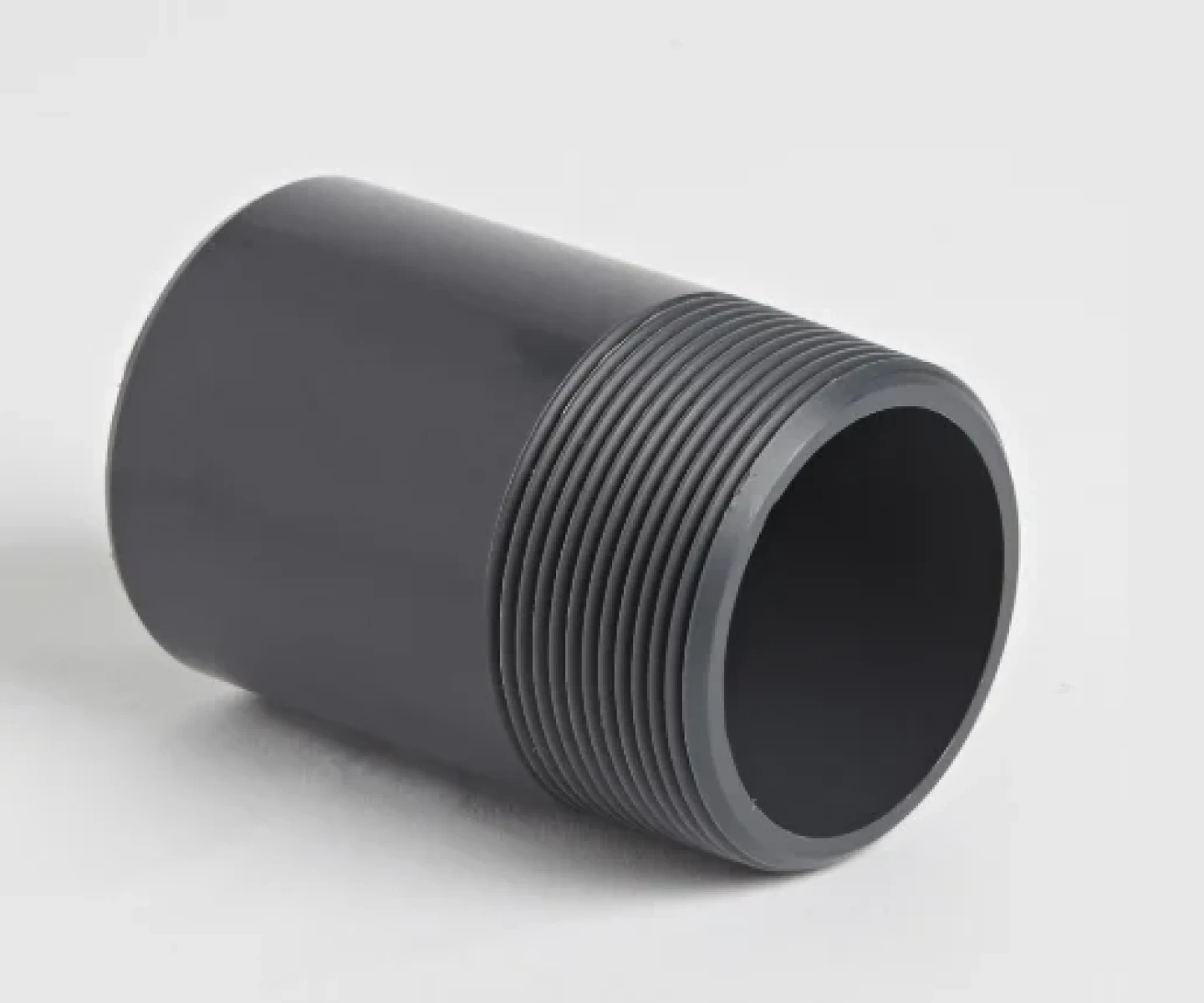
PVC is a thermoplastic material that combines excellent flame retardancy with corrosion resistance, and its hardness can be adjusted using plasticizers. PVC is commonly used in the manufacture of electrical insulation components, building materials, and construction parts.

priceRating
★★★★★
machinability
Good
wallThickness
≥ 1.0 mm
tolerance
±0.02 mm–±0.05 mm

Description
Electrical insulation components, building materials and construction parts, consumer electronics
PVC can be enhanced with specific properties through processes such as spraying, printing, laminating, and surface activation.
PVC exhibits poor heat resistance and weather resistance, with relatively limited mechanical properties.
Select from our full range of materials for your application.
PVC combines excellent flame retardancy, chemical resistance, and electrical insulation properties, and is often used in electrical components, equipment protective parts, structural components in chemical environments, and industrial auxiliary parts
Ready to start?
From material selection to machining capability — supporting reliable CNC PVC parts production.

PVC is polymerized from polyvinyl chloride monomers. Its characteristic feature is the ability to adjust material hardness by adding plasticizers, typically categorizing it into flexible PVC (PVC-P) and rigid PVC (uPVC). The material also exhibits excellent flame retardancy and electrical insulation properties, so it is particularly suitable for manufacturing safety-critical applications like electrical wires and cables. Additionally, it possesses outstanding corrosion resistance. During CNC machining, PVC is easy to cut, provides stable and efficient overall processing, and causes minimal tool wear.

Xmake provides professional engineering plastic processing services. Leveraging our in-house machining facilities and established collaborative manufacturing network, we reliably handle part processing demands ranging from small batches to large-scale production. We perform precision machining on PVC materials, achieving excellent dimensional stability and consistency through optimized tooling and process parameter control. This meets manufacturing requirements for functional components subjected to medium to low loads. Additionally, we offer a range of surface treatment processes tailored for engineering plastics, delivering not only functional performance but also meeting aesthetic and textural processing demands.
Have more questions? Our engineering team is ready to help you find the right solution.

Building A, Jinsheng Finance Building, No. 217 Nanhuan Road, Bao'an District.
MAKE DIRECT HOLDINGS LIMITED Unit 1111, 11/F, Hollywood Plaza, 610 Nathan Road, Mong Kok, Kowloon, Hong Kong